

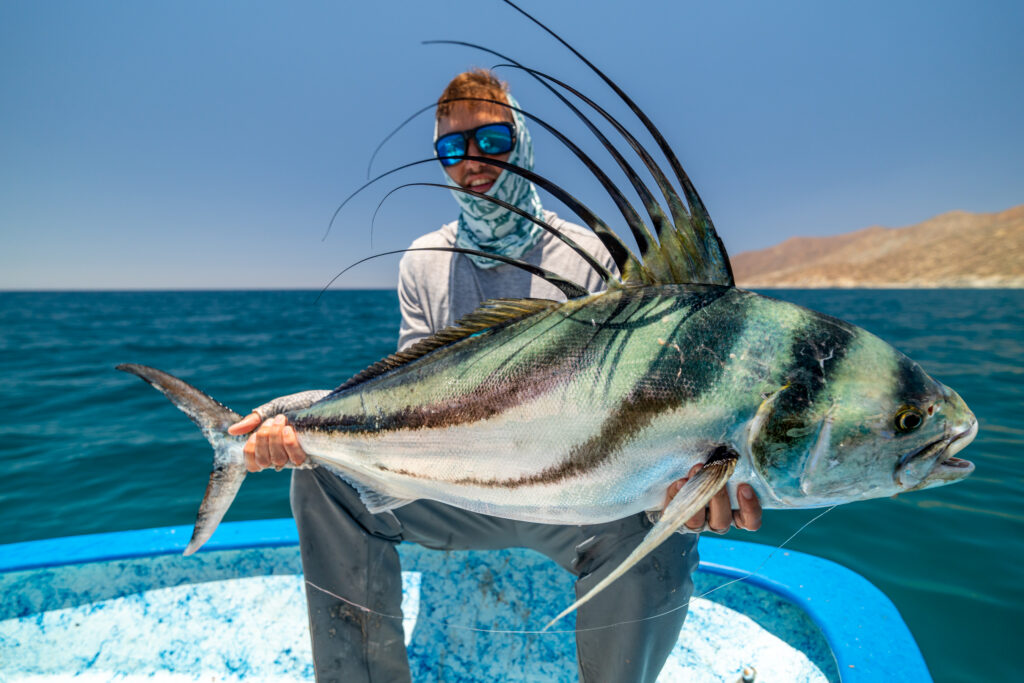
Long before Instagram reels of beach-sprinting anglers and perfectly lit roosterfish photos, the Sea of Cortez had already claimed its place in sportfishing lore. The story of how this remote stretch of Baja became the undisputed “Roosterfish Capital of the World” is equal parts pioneering grit, bad weather, and pure passion for one of the ocean’s most distinctive predators.
It started quietly after World War II. In the early 1950s, adventurous pilots and a handful of visionaries began carving fishing lodges out of goat ranches along what we now call the East Cape. Places like Rancho Buena Vista opened the door. Writers such as Ray Cannon of Western Outdoor News spread the word of mind-boggling numbers of fish like marlin, dorado, and, of course, the striking pez gallo with its seven-spined dorsal “comb.”
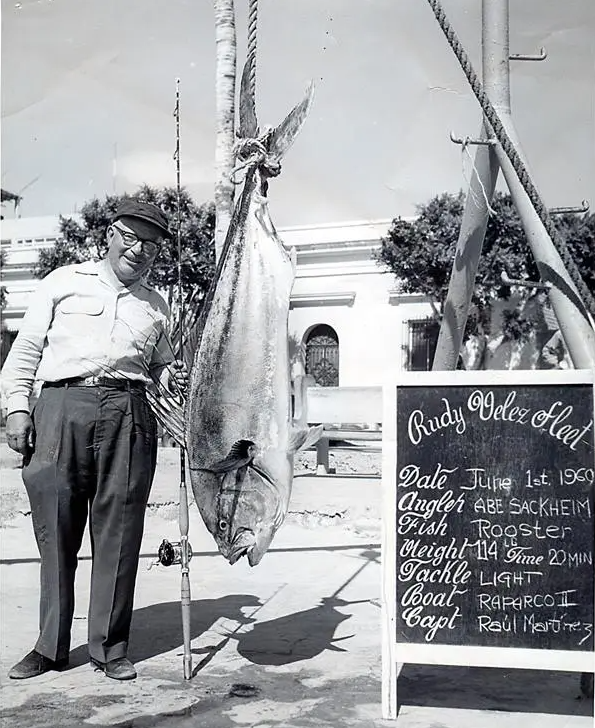
Then came the record that still stands. On June 1, 1960, Abe Sackheim landed a 114-pound roosterfish off La Paz. The fish measured 64 inches long with a 33-inch girth. More than six decades later, that all-tackle mark remains unbroken – one of the longest-standing major saltwater records in IGFA history. The East Cape and surrounding waters had officially announced themselves.
Seven years later, a small group of roosterfish-obsessed anglers from the Los Angeles Billfish Club decided the fish deserved its own stage. The idea for the International Roosterfish Tournament was literally sketched on the back of a cocktail napkin. In 1967 they gathered at the still-under-construction Hotel Punta Colorada, owned by Bobby and Cha Cha Van Wormer, perched on a bluff overlooking the Sea of Cortez. Only eight anglers showed up for that first invitational event.
Mother Nature had other plans. A tropical storm hammered the coast. Fishing was almost completely shut down, and no official winner was declared that year. Undeterred, the group returned in 1968. Six participants caught 43 roosterfish. The tournament was off and running. It remained invitation-only, operated on the honor system, and eventually standardized on 12-pound test line with points awarded only for roosters (no other species counted). Over the decades it grew into one of Baja’s longest-running and most respected events, cementing the East Cape’s reputation.
Local lore grew alongside the competition. Anglers still swap stories of kids walking home with roosterfish almost as big as themselves, of fish charging so hard they nearly beach themselves chasing bait, and of epic multi-hour battles that stretch into the dark. One modern chapter added a conservation twist: in 2013, angler Ron Burgess released an estimated 135-pound rooster (possibly larger than the official record) choosing the health of the fishery over personal glory.
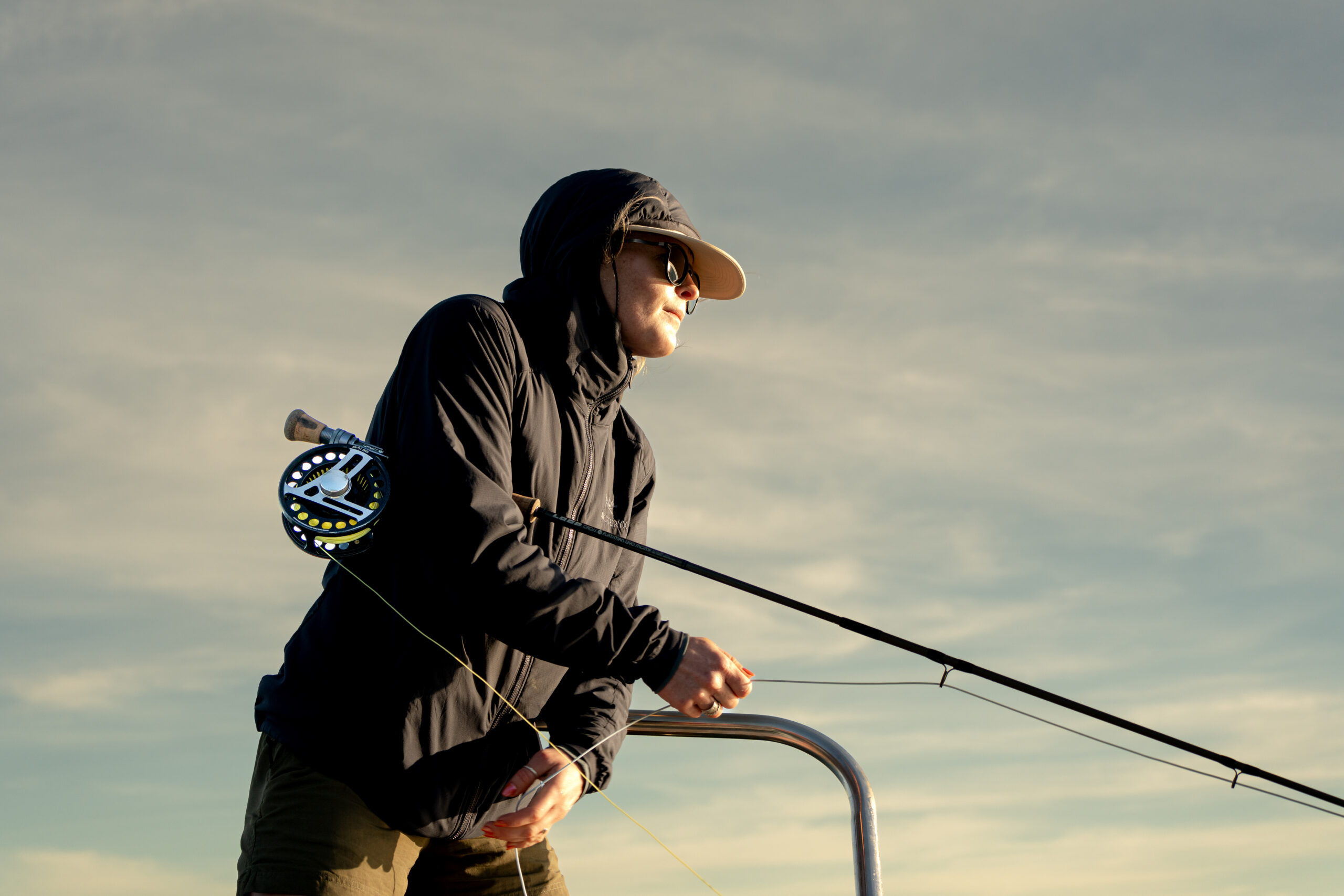
Fast-forward to today. The same waters that produced the 1960 record and hosted those early tournaments now welcome fly anglers chasing the same fish with 10- and 12-weight rods. Beach sight-fishing, panga presentations, and the pure visual thrill of a comb slicing the surface remain the heart of the experience. What began as a rugged, half-built-hotel adventure has matured into a refined, accessible pursuit, while the fish themselves have never lost their wild edge.
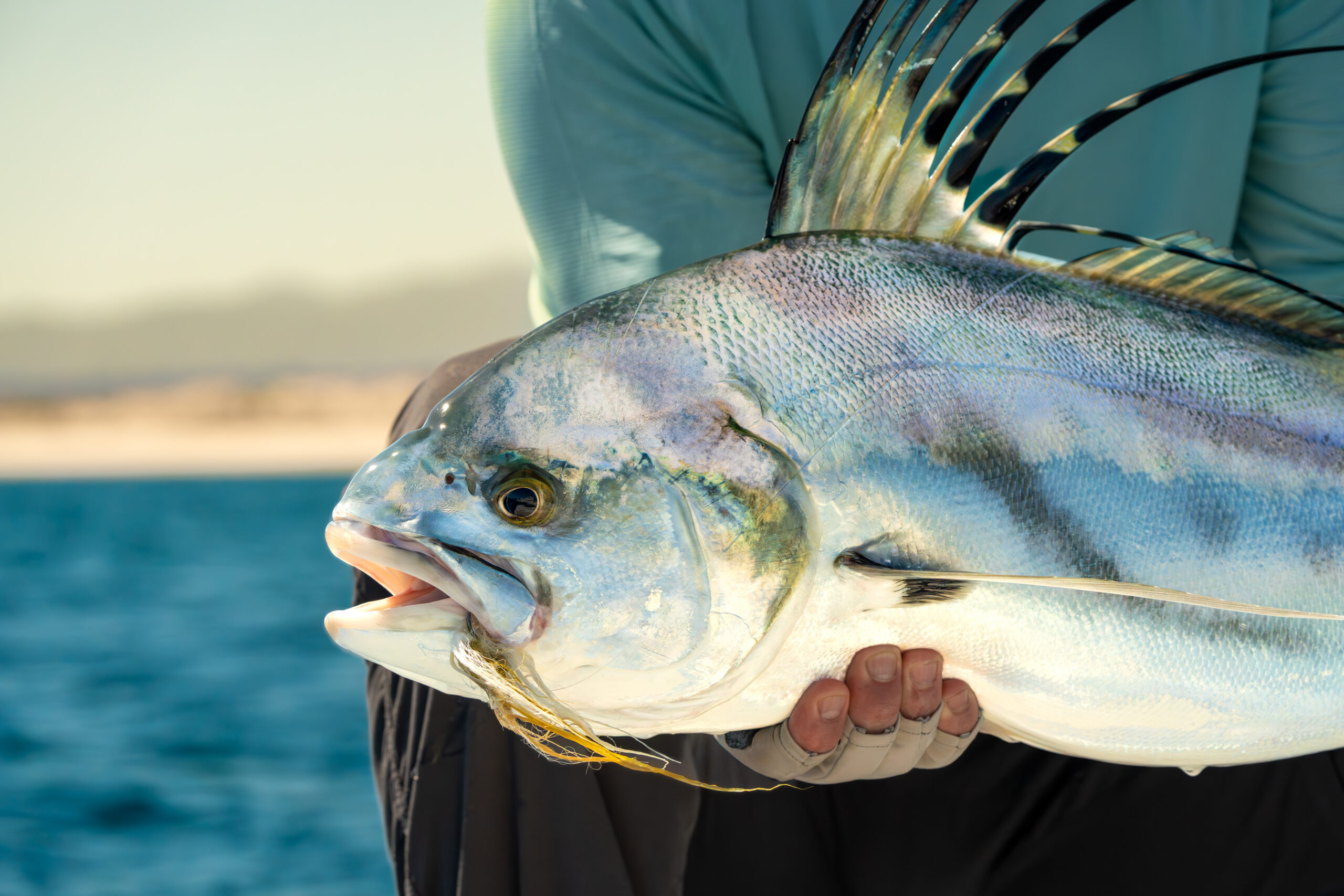
The Sea of Cortez didn’t become the Roosterfish Capital of the World by accident. It was earned through pioneers, records, storms, and a stubborn refusal to quit. And the next chapter is still being written every time an angler steps onto those beaches or boards a panga with the hope of seeing that distinctive dorsal fin rise.
Ready to write your own page in this history?
Got Fishing’s brand-new Sea of Cortez Roosterfish program puts you right in the middle of the action with expert local captains, carefully chosen dates, and the full beach-and-panga experience. Visit our trip page or contact our team today to learn more and reserve your spot.