

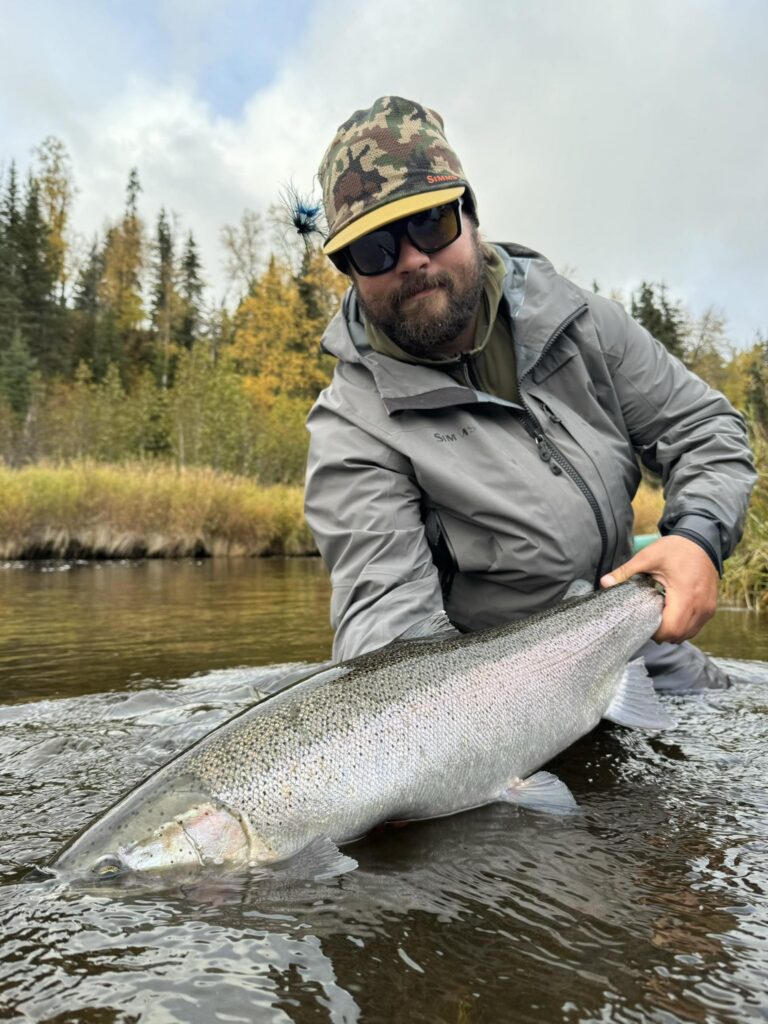
First off, it’s worth stating plainly: the only wrong way to fish for Steelhead trout is to do so illegally or unethically. That includes ignoring regulations on a given body of water or targeting fish on active redds. Beyond legality, there is also a shared responsibility among anglers to respect spawning fish and the habitats that support them. Steelhead are a prized and vulnerable resource in many systems, and how we choose to pursue them matters just as much as whether we succeed.
After more than two decades of targeting steelhead across a wide range of fisheries and conditions, one truth has become clear: there is no single “best” method. Steelhead can be caught using many proven techniques, but effectiveness is almost always dictated by matching the approach to the water being fished. In fly fishing specifically, the two most common presentations, indicator (dead-drifted) fishing and swung flies, each excel in very different environments.
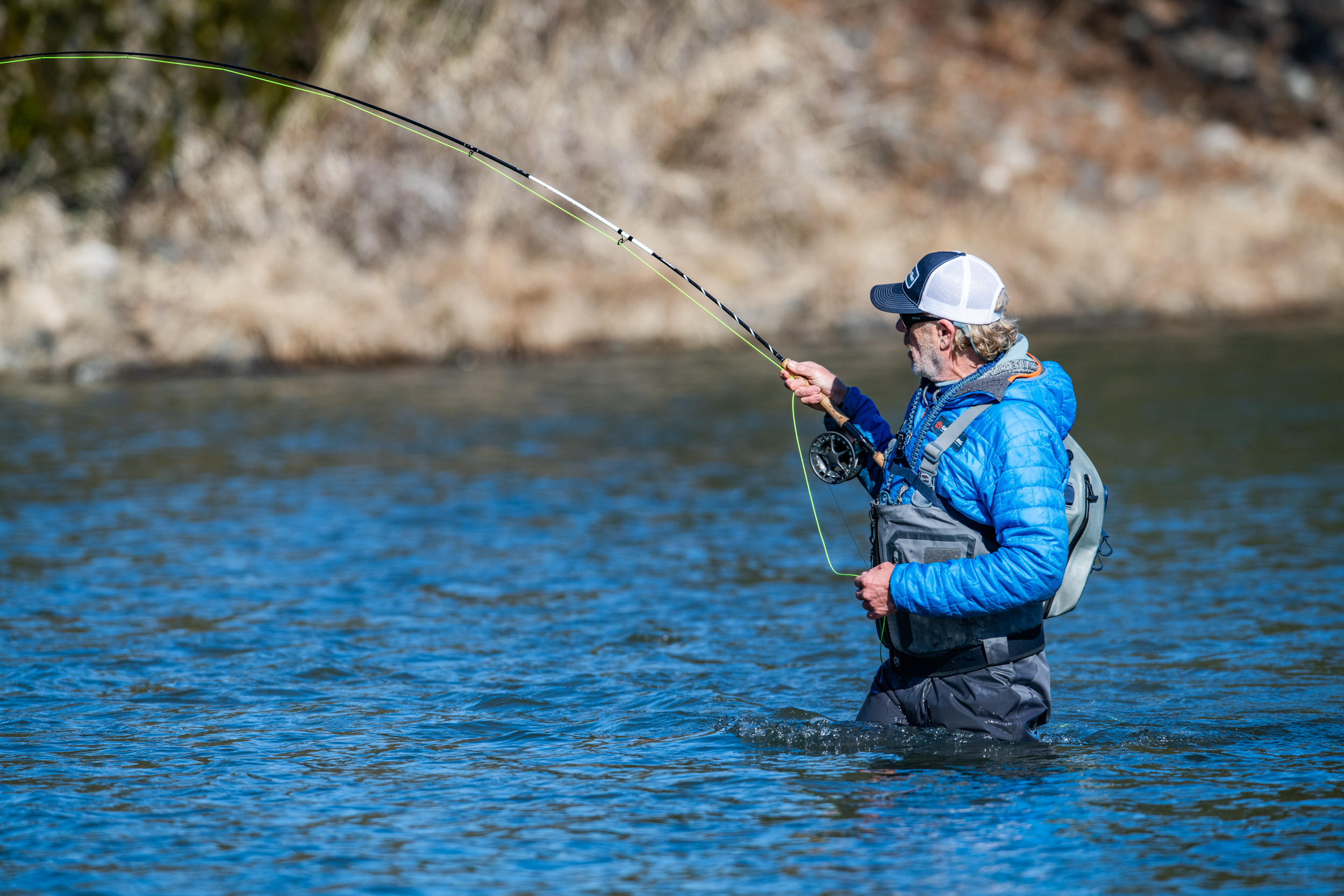
Matching the Method to the Water
At its core, the indicator vs. swung fly discussion is not about superiority, but suitability.
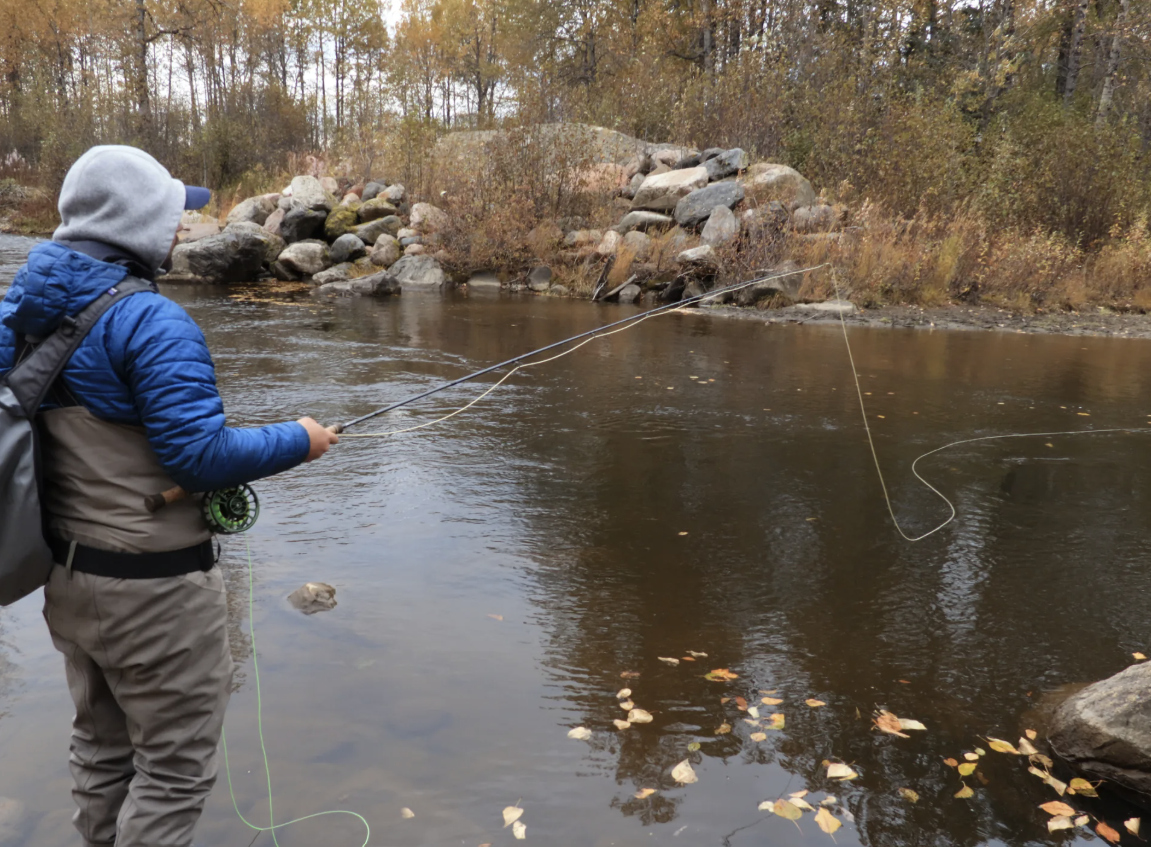
Swinging flies tend to be most effective in larger rivers with relatively uniform current and fewer obvious in-water obstructions. In these settings, a swung fly can travel across broad sections of water in a natural arc, covering structure efficiently and presenting to multiple holding lies in a single pass. It is, in many ways, a search method – ideal for systematically covering water where fish could be spread across wide, less distinct holding areas.
By contrast, indicator fishing excels in more complex or confined environments. Smaller rivers, or larger systems with broken currents, rocks, logs, and other visible structure, often demand a more precise presentation. A dead-drifted fly suspended under an indicator can be guided into specific lanes and holding pockets with much greater control.
Consider a large midstream boulder protruding just above the water’s surface. A swung fly may effectively cover the seam in front of it, but becomes inconsistent around its sides and largely ineffective behind it, where current shifts and eddies disrupt a natural swing. An indicator rig, however, allows a fly to be presented upstream and tracked directly into those varied micro-holding zones, adjusting naturally with the current as it deflects around structure. The result is a more thorough and deliberate presentation in technically complex water.
The Role of Water Temperature
Water temperature can also influence which method performs better on any given day. In many winter steelhead systems, a slight warming trend often coincides with improved success on swung flies. Conversely, dropping temperatures can slow swung presentations, as fish may be less inclined to move laterally to intercept a fly. In a summer steelhead scenario, the exact opposite is true. A cooling trend in say late August can spark activity in fish that have been sedentary in the warm summer waters.
Indicator fishing, on the other hand, often appears less sensitive to short-term temperature shifts. Because the presentation is more passive and places the fly directly in the fish’s holding lane, it reduces the need for movement or decision-making on the fish’s part.
That said, regional differences matter. In colder northern systems, such as parts of Alaska or British Columbia, steelhead may be more conditioned to cold water feeding behavior, making them more consistently receptive to swung presentations even in low temperatures. In those environments, even a slight increase in temperature still can noticeably improve overall activity while indicator tactics remain more consistent irrespective of temperature changes.
Conservation and Fishing Pressure
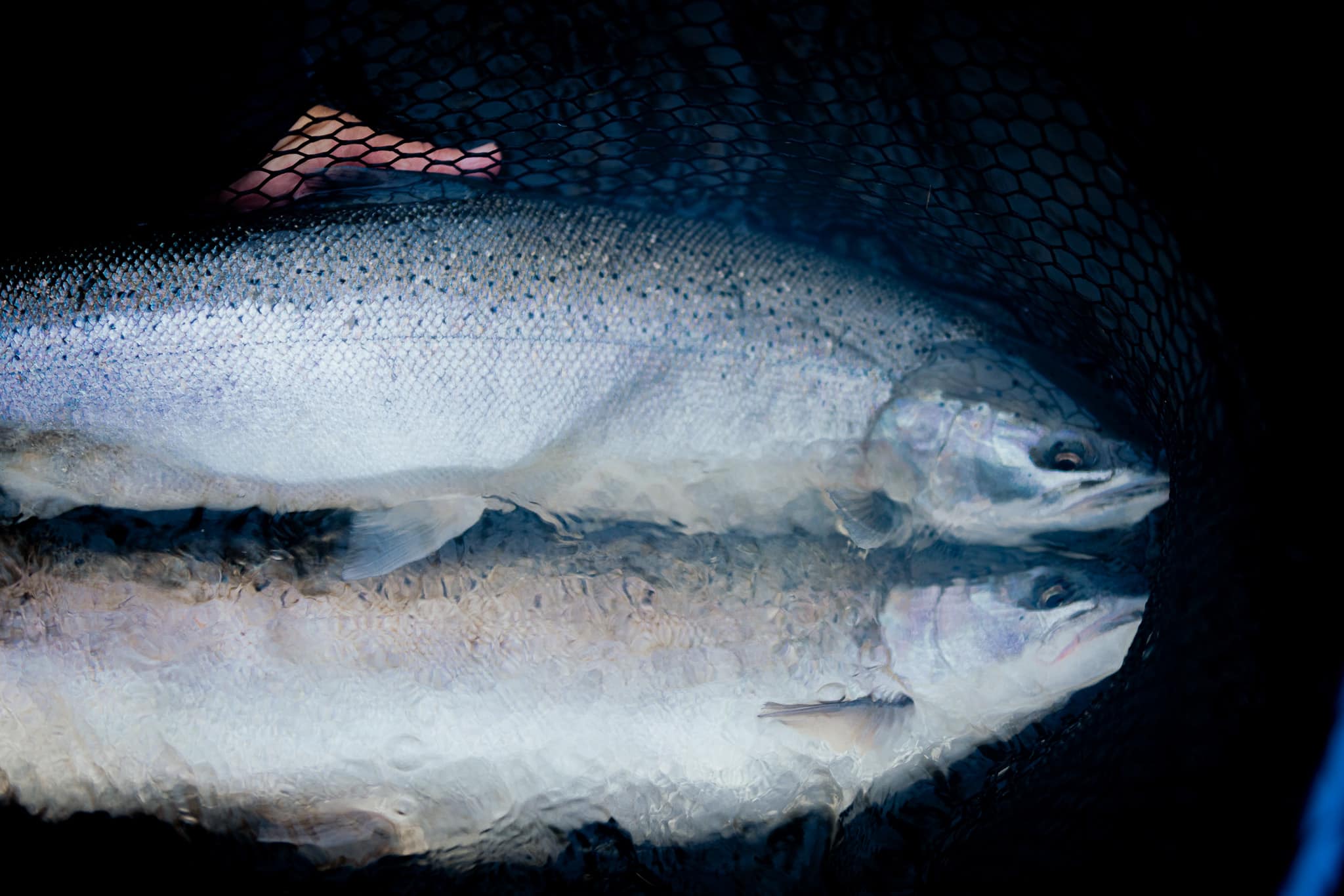
There is also a conservation argument that occasionally gets overlooked in this discussion. A swung fly generally requires a higher degree of willingness from a fish to eat. It is, in essence, a presentation that invites response rather than forcing interaction.
In contrast, an indicator rig can be more intrusive in a holding environment. In a scenario where multiple steelhead are holding in a confined pool, a dead-drifted fly is more likely to pass directly through each fish’s position. Over time, this can lead to multiple hook-ups from the same pool.
A swung fly, however, tends to select for fish that are more aggressive or willing to move. While both methods are legitimate and widely practiced, they differ in how much pressure they can place on individual fish within a single piece of water.
This raises an important question every angler eventually encounters: how many fish is enough? Experience often reshapes that answer over time. Early on, the focus is typically on success and numbers. Later, many anglers shift toward selectivity: choosing methods not just for efficiency, but for the kind of experience they want to have on the water. For some, that becomes the rhythm and anticipation of a swung fly. For others, it remains the technical precision of a well-executed drift.
Final Thoughts
Steelhead fishing is ultimately a study in adaptation. Indicator fishing and swung flies are not competing philosophies so much as complementary approaches shaped by water type, temperature, structure, and angler intent. Each has its place, and each can be the “right” answer depending on the moment.
What matters most is not allegiance to a method, but awareness of the fish, the system they inhabit, and the impact of how we choose to pursue them. Respect for the resource should remain the foundation of every decision on the water. In the end, there are no absolutes in steelhead angling – only conditions, observations, and experience earned one cast at a time.
If steelhead fishing is of interest to you, please check out our upcoming hosted trip to Alaska this October (2026) – it’s an excellent opportunity for anglers to fish productive waters with expert guides.

About The Author: David Kalinowski
Adventure Consultant • Alaska Specialist
With 25 years in the fly-fishing industry—half of that focused on destination travel—I bring deep experience and insight to every angler I work with. Fishing isn’t just my career; it’s my passion and helping others achieve their goals on the water is incredibly rewarding. I’ve been fortunate to explore remarkable places around the world, each one adding to my perspective and appreciation for the sport.
Let’s Connect // david@gotfishing.com • (208) 271-9653